Communication considerations
A printable version of this lesson is available for download below.
Doctors For Nutrition asked Dr Martyn Williamson, GP, for his insights on the importance of communication when it comes to nutrition.
As a GP, what led you to develop an interest in nutrition?
It all started when my wife suggested we went sugar, meat and dairy free! She asked me to watch two documentaries, Forks Over Knives and That Sugar Film. Both contain powerful messages about the impact of nutrition on health. I was particularly taken by Caldwell Esselstyn curing heart disease through whole food plant-based (WFPB) nutrition. I remembered hearing about a nutritional cure for heart disease in the 1990s and waited for it to appear in the guidelines, but it never did, so I forgot about it. I felt ethically obliged to let my patients know about this information so they could make their own decisions and I went WFPB completely, so I could talk to them about what it was like. I spent about 6 months reviewing all the evidence I could find to reassure myself that it was safe to inform my patients about this. Once I got going, those people who took up the challenge consistently reported better health with improved results. They were the ones who looked happy and cheerful in the waiting room and consults were always a pleasure. Inspired by this, my wife (a dentist) and I have committed ourselves to the prevention and cure of chronic disease as part of a wider commitment to helping others thrive and flourish. This is now what our lives are about.
You have a particular interest in effective communication. Tell us more about why communication is a critical area for doctors to be mindful of?
Communication is the most essential aspect of medical practice in my view and it is also one of the least well practised skills and least well taught skills that I’ve come across. All my transformational learning about communication has come from outside the profession! One of the most important aspects which I’ve never seen taught is our own internal reactions to patients. Most of us are tossed and turned in the same sea of feeling and emotions that afflict the people we are trying to help. Also we ‘tell them’ what to do rather than inspire them to make change. Unless you are an anaesthetist and your patient is asleep, the better you communicate the better your result will be.
Why is effective communication particularly important when it comes to health professionals discussing nutrition with patients?
Great question. To answer it you have to reflect on what we want from talking about nutrition with patients. For myself, I want patients to be empowered to make the changes which they feel are appropriate for them. I want them to be aware of what they can achieve if they make a change in what they eat. I also want them to feel understood and supported. All these are important as typically patients will need to make significant changes to achieve results. These changes can be hard for people to do as they have to overcome years of habit as well as learn to handle reactions of family and friends.
What approaches do you take when speaking to individuals or groups about nutrition or dietary changes? What has worked well or not so well?
Telling people what to do does not work at all well. You’ll be lucky to get more than 10% responding. People usually know what they should do already so ‘telling’ doesn’t really add much. I have had the most success using a mix of the following strategies.
- Asking people if they are interested in the possibility of curing or reversing their disease. This creates a motivation if they say yes. Then I explain the evidence for a WFPB way of eating. I then check if they are interested in giving it a try, and suggest a finite period of time, e.g. 3 weeks at which point we’d review. I stress that this is a treatment and it only works if you do it. A good time to ask someone is when they feel stuck, and are fed up with their situation.
- Asking people what it’s like having to take pills all the time, or having this disease (diabetes, hypertension, IHD, autoimmune disease etc). This can then lead to asking about interest in cure.
- I let people know that this is for them to consider. If it’s not the way forward for them at the moment then that’s fine.
- I suggest if they want to see results, then they should make the biggest change possible i.e. complete WFPB.
The whole strategy is geared towards respecting people and inspiring them to make change. Using these strategies I have had a series of patients go completely plant based following one single 15-20 minute consult where we’ve dealt with all their other stuff. I recommend they watch Forks Over Knives if they want to get more of a feel for it and of course offer a follow up.
Many medical students and doctors find the idea of discussing nutrition challenging. Are there any tools or techniques that you would recommend to support effective communication?
The first step is to abandon the ‘doctor knows best’ position which also has patients as ‘broken’ in some way and in need of fixing. This is hard to do as you will need those skills in other circumstances. It takes practice.
Secondly, focus all your attention on the patient and not on any particular outcome from your discussion with them. In this way I become committed to achieving the best possible outcome for a patient, without being attached to my own idea of what that might be.
Thirdly, help the patient articulate what’s important to them right now and for their future. How would they like it to be? How can we help them get there?
Fourthly, be prepared to apologise if you make a misstep in communication when something has been interpreted differently from what you meant. It’s never about you, it’s always about them!
As you practice these skills you will become more and more proficient. And it’s always a learning journey. Some good books to read are:
- Crucial Conversations by Patterson, Grenny, McMillan and Switzer – particularly good for recognising the traps we put ourselves in without realising and contains practical techniques to use in the moment.
- Magic in Practice by Garner Thomson and Khalid Khan. This is about NLP techniques applied to medical practice and provides a number of simple techniques to help you recognise the language patients use to keep themselves stuck and how to help them move forward.
- Communication Skills That Heal by Barry Bub. An enlightening look at how we can relieve suffering and heal through communication.
- What Patients Say, What Doctors Hear by Danielle Ofri. This book highlights the mismatches that routinely occur and the author’s journey as she learns more and more about communication and what it means.
I have found that applying these skills in all aspects of life makes it much richer and more rewarding. I can be tired at the end of an intense day but energised via the connection with others. Medicine becomes much more fun.
Downloads
About Dr Martyn Williamson
Martyn moved to New Zealand from the UK in 1986. He has spent the last 35 years in rural general practice, mixing this with a teaching and research role at Dunedin School of Medicine. He has always been passionate about helping people thrive and flourish, and over the last 5 years has turned his focus on helping people prevent, reverse and cure their chronic illnesses.
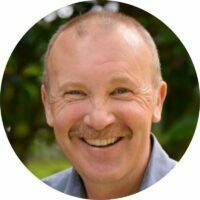
He and his wife Liz were nominated Plant Based Practitioners of the Year for 2019 and in 2020 they both obtained an international certification in Lifestyle Medicine. Martyn is committed to raising awareness about the power of whole food plant-based nutrition and the other pillars of lifestyle medicine, to treat disease so that people have a choice to regain some control over their health.
He is a co-designer of the Safe and Effective Clinical Outcomes clinic, which provides simulated GP experiences for medical students prior to their placements. He also co convenes two postgraduate papers, Teaching and Learning in Medical Practice and the Nature of Medical Practice. He is a certified trainer for ‘Crucial Conversations’ which is a methodology that deals with communication in challenging situations. He has also trained as a life coach and most recently obtained certification as a coach in NLP, which is where the idea for the course “Healing with Words” was generated.
Martyn is happy to be contacted by medical students who are interested in plant based nutrition, lifestyle medicine and communication and is prepared to run zoom presentations or discussions on any of the above. The course “Healing with Words” is currently in preparation and will run online. While designed for practising health professionals, medical students would be welcome to participate.